Source Mobile Pedestal Workstation for Office, Retail, and Lab
Explore 30 mobile pedestal workstation options from China. Compare models like S12 and DY-D1014, featuring metal legs and manmade board tops. Verify OEM services, ISO certifications, and packing details for commercial office desks; compare the available evidence and request quotations based on your requirements.
Key considerations
Products List




Comprehensive Sourcing Guide
Mobile Pedestal Workstation Sourcing Guide
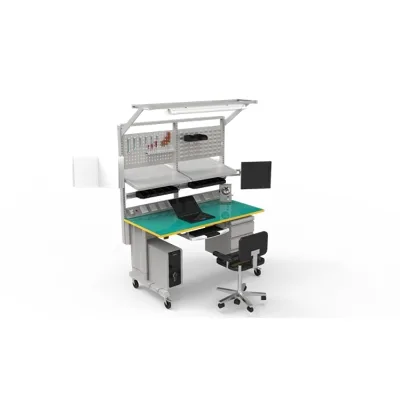
Procuring mobile pedestal workstations requires distinguishing between fixed office desks and units designed for dynamic mobility. The observed market data indicates a strong presence of commercial furniture specifically categorized for office desks, often featuring customizable dimensions and mixed model availability. Buyers must verify that the "mobile" attribute aligns with the intended workflow, as many listed items are static units with panel wood styles or metal legs that lack integrated locking casters.
The product listings reveal a diverse range of origins, primarily from Guangdong and other regions in China, with models ranging from simple designs to complex European styles. While some entries explicitly mention "OEM" and "ODM" services, the core functionality of the pedestal unit must be confirmed against the specific use case. Sourcing teams should prioritize suppliers who clearly define the mobility features, ensuring the unit meets the specific spatial and ergonomic requirements of the target office environment.
Product Scope and Observed Listing Signals
The current market signals suggest a wide variance in product configurations, with observed models like S12 and DY-D1014 representing different structural approaches to office furniture. Buyers should note that while many items are described as "New" and "High Quality," the specific application varies significantly between general commercial use and specialized office desk setups. The presence of "Many Choices" for colors and "Optional" finishes indicates a high degree of customization potential, which is critical for branding consistency in corporate environments.
Listing attributes frequently highlight "Customized" options and "Service: OEM ODM," suggesting that standard off-the-shelf inventory may not meet unique spatial constraints. The observed packing methods, ranging from simple cartons to foam-protected export cartons, imply that shipping logistics must be carefully planned to prevent damage during transit. Procurement teams must scrutinize the "Specific Use" tags to ensure the selected workstation is not merely a generic desk but a functional mobile unit capable of supporting the intended daily operations.
Technical Specifications to Verify
Technical verification must begin with the physical dimensions and material composition, as observed standards include specific measurements like 283030601200 and volume constraints such as 0.2 CBM or 0.45 CBM. The leg materials are predominantly metal, while desktops often utilize manmade board or solid wood, requiring a clear assessment of durability and load-bearing capacity for heavy equipment. Buyers should confirm whether the "Standard and Accept Custom" size options align with the actual floor plan dimensions of the intended installation site.
Mobility and assembly are critical technical factors that often lack explicit detail in general listings. While some products are marked as "Undisassembly," others may offer "Kd Packing" for easier transport and reassembly. The "Mixed Models" attribute suggests flexibility in sourcing, yet the buyer must verify if the mobile pedestals can be integrated with existing wall combinations or if they require standalone placement. Ensuring the structural integrity of the metal legs and the stability of the mobile base is essential for long-term safety and usability.
Compliance and Safety Documentation
Compliance verification is paramount, with observed certifications including CCC, ISO, and specific factory certificates like SGS. These documents serve as the primary evidence of a supplier's adherence to quality management systems and environmental standards, such as ISO14001. Buyers must request current copies of these certificates to ensure they are valid and applicable to the specific production batch, rather than relying on generic claims found in product descriptions.
Safety documentation should also address the material composition and fire resistance, particularly for manmade board and wood products used in commercial settings. The presence of "Cec" certification in some listings points to potential energy or environmental compliance, which is increasingly important for corporate sustainability goals. Procurement teams should verify that all materials meet local safety regulations for office furniture, ensuring that the finished product does not pose health risks to employees through off-gassing or structural failure.
Cost Drivers and Commercial Terms
Cost structures are heavily influenced by the level of customization and the complexity of the packing requirements. The observed price range of 28 to 70,000 USD reflects a vast disparity between basic units and highly engineered, custom-designed workstations. Factors such as the "OEM" service level, the choice of materials like solid wood versus manmade board, and the specific "Style" (e.g., European or Modern) will significantly impact the final unit price.
Commercial terms must account for the Minimum Order Quantity (MOQ), which varies from 1 to 100 units across different suppliers. Buyers should negotiate based on the "MOQ: 10" or similar thresholds observed in the market, ensuring that the order volume justifies the setup costs for custom molds or finishes. Additionally, the "Standard Export Carton" or specialized packing requirements can add to the logistics cost, necessitating a clear breakdown of shipping and handling fees in the final commercial agreement.
Supplier Qualification and Quality Control
Supplier qualification should focus on the origin and production capacity, with a significant concentration of manufacturers in Guangdong, China. The "Hongye Shengda" brand and other listed entities demonstrate the existence of established players, but buyers must verify the specific factory capabilities rather than relying solely on brand names. The "Quality: High Quality" claim requires independent validation through factory audits or third-party inspection reports to ensure consistency across the production run.
Quality control processes must be rigorous, especially given the "Over 5 Years" lasting claim for some products. Buyers should implement a pre-shipment inspection protocol that checks for structural integrity, finish quality, and the functionality of any mobile components. The "Condition: New" status is a baseline requirement, but the inspection must also verify that the "Customized" elements match the approved samples exactly, preventing discrepancies between the ordered specifications and the delivered goods.
Long-Term Procurement Checks
Long-term procurement success depends on verifying the durability and maintenance requirements of the mobile pedestal workstations. The "Lasting: Over 5 Years" attribute suggests a focus on longevity, but this must be backed by warranty terms and clear maintenance guidelines provided by the supplier. Buyers should establish a service agreement that covers potential wear and tear on the mobile mechanisms and the structural components over the expected lifespan of the furniture.
Continuous monitoring of supplier performance is essential to maintain the "High Quality" standard over multiple order cycles. Procurement teams should track the consistency of the "Standard Export Carton" packing and the reliability of the "OEM ODM" service delivery. Regular reviews of the supplier's ability to meet the "Customized" requirements and maintain the "New" condition of products upon delivery will ensure that the office environment remains functional and aesthetically consistent over time.
FAQs
What certifications are available for mobile pedestal workstations?
Certifications such as CCC, ISO, ISO9001, ISO14001, and SGS are available for these units. These credentials ensure compliance with international quality and environmental standards. Buyers can verify factory certificates to confirm manufacturing reliability. This documentation supports procurement for commercial and office environments requiring verified safety and quality benchmarks.
Can mobile pedestal workstations be customized for specific needs?
Yes, customization is available for size, color, and style. Buyers can choose from European, modern, or simple styles with panel wood options. OEM and ODM services allow for tailored designs. The desktop material can be manmade board or wood, ensuring the workstation fits specific office aesthetics and functional requirements.
What is the typical MOQ for ordering these workstations?
The minimum order quantity ranges from 1 to 100 units. Some suppliers require a specific MOQ of 10 pieces for certain models. This flexibility allows small businesses to test products while larger enterprises can place bulk orders. Buyers should check individual product listings for exact MOQ requirements before finalizing procurement plans.
How are mobile pedestal workstations packaged for shipping?
Packaging methods include standard export cartons, KD packing, foam plus carton, and individual cartons. These methods protect the metal leg and manmade board desktop during transit. Proper packaging ensures the units arrive in new condition. Buyers can expect secure packing that minimizes damage risks during international shipping from manufacturing hubs.
Where are these workstations typically manufactured?
Manufacturing primarily occurs in Guangdong, China, including locations like Heshan Jiangmen. This region is a known hub for commercial furniture production. Buyers sourcing from this area benefit from established supply chains. The origin ensures access to specialized factories capable of producing high-quality office desks and pedestals efficiently.
What materials are used in mobile pedestal workstations?
Common materials include metal for legs and manmade board or wood for desktops. These materials provide durability and stability for commercial use. The combination supports heavy loads while maintaining a modern or simple aesthetic. Buyers can select based on preference for wood style or panel finishes to match existing office decor.